
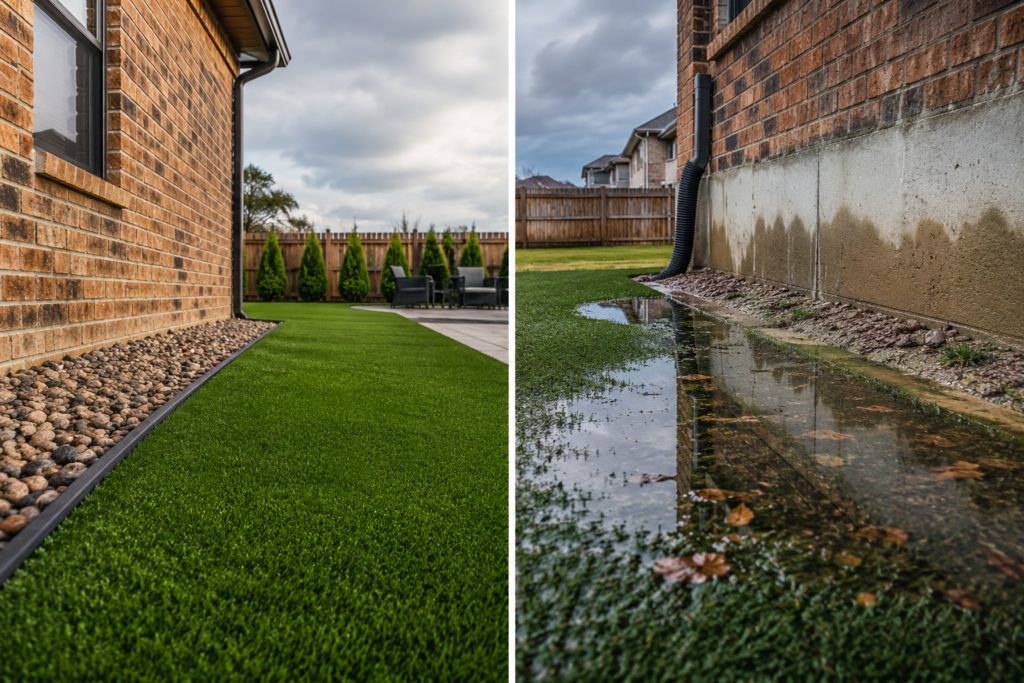
Synthetic turf is a beautiful, low-maintenance upgrade but when drainage is overlooked, it can quietly push water toward your foundation, crawl space, or basement. Here’s what installers don’t always explain upfront.
Water Damage Emergency?
If you’re seeing basement moisture, foundation dampness, or flooding linked to yard drainage don’t wait. Akron’s trusted restoration team is available 24/7. Visit Akron OH Water Damage
Table of Contents
- How Artificial Grass Handles Water
- 5 Common Drainage Mistakes
- Warning Signs Checklist
- When to Call a Restoration Pro
- What Proper Installation Looks Like
- Insurance Implications
- Trusted Resources
- The Bottom Line
Artificial grass has exploded in popularity across Ohio and for good reason. It stays green year-round, eliminates muddy patches, and dramatically cuts down on lawn maintenance. But here’s something many homeowners discover too late: improperly installed synthetic turf can redirect water in ways that damage your home’s foundation, basement, and landscaping infrastructure.
At Heavenly Artificial Grass Installation, we believe in radical transparency. So let’s break down exactly how artificial grass interacts with water, what drainage problems look like, and most importantly what to do if you’re already seeing signs of water intrusion in your home.
37%
of basement water damage is linked to poor yard drainage and grading
$3,500+
average cost of water damage restoration for a single-family home
72 hrs
window to act before water damage leads to mold growth indoors
How Artificial Grass Handles Water (and Where It Can Go Wrong)
Unlike natural grass, which absorbs and filters water through its root system and the organic soil below, synthetic turf is a manufactured surface. Water has no grass roots to travel through it passes through perforations in the turf backing and into whatever substrate lies beneath.
When installed by experienced professionals with proper site preparation, this drainage process is efficient and safe. A well-graded sub-base typically a layer of decomposed granite or crushed aggregate channels water away from the home and disperses it into the surrounding soil or a drainage system.
But when those steps are skipped or done carelessly, the results can be serious:
- Water pooling under the turf-The backing traps moisture against the sub-base, creating standing water that has nowhere to go.
- Redirected runoff toward the foundation-If grading isn’t done correctly, rainwater flows toward the house instead of away from it.
- Compacted sub-base over time-Heavy foot traffic compresses the drainage layer, reducing permeability and causing slow-drain pockets.
- Blocked perforations-Debris, infill materials, and sediment can clog the turf’s drainage holes, turning it into a nearly impermeable surface.
Warning Sign-After heavy rain, walk the perimeter of your artificial turf and press your hand against the edges near your home’s foundation. If you feel dampness, or if water is visibly pooling near the house line, your drainage may be compromised. Don’t wait early action can prevent thousands in structural damage.
The 5 Most Common Artificial Grass Drainage Mistakes
1. Skipping or Rushing the Sub-Base Grading
The sub-base is the unsung hero of every turf installation. A correctly graded sub-base slopes away from the home at a minimum of 1–2% meaning water always has a downhill path that leads away from structures. When installers rush this step (or eliminate it entirely), flat or inward-sloping surfaces send every rainstorm’s runoff directly toward your siding, foundation, and crawl space.
2. Using the Wrong Infill Material
Infill keeps turf blades upright and plays a major role in drainage. Crumb rubber infill, while popular, can swell slightly when wet and reduce permeability over time. Silica sand or natural infill alternatives like cork or zeolite maintain drainage channels better. If your installer defaulted to the cheapest infill option without explaining the tradeoffs, drainage may degrade faster than expected.
3. Not Installing Perimeter Drain Lines
In properties with slopes, clay-heavy soil, or expansive lawn areas near structures, perimeter French drains or channel drains are not optional extras they’re a necessity. Without them, you’re relying entirely on soil permeability to handle 100% of the runoff, which often fails in Ohio’s wet spring and fall seasons.
4. Incorrect Turf Overlap at Edges
Where artificial turf meets a concrete patio, driveway edge, or garden border, the seam must be sealed or angled correctly. An improperly finished edge creates a water funnel that channels runoff in a concentrated stream exactly where you don’t want it along structural boundaries.
5. Ignoring Existing Drainage Problems
If your yard had drainage issues before the turf went in, installing synthetic grass without first correcting those issues will amplify them. Natural grass, for all its maintenance demands, actually helps buffer poor drainage through root absorption. Removing it and adding a semi-permeable surface without addressing underlying slope or soil problems almost always makes things worse.
Signs Your Artificial Grass May Already Be Causing Water Damage
Early Warning Checklist Check These Monthly
- Water pooling at the edges of your turf after rain, especially near the home
- Damp or musty smell coming from your basement after wet weather
- Efflorescence (white powder deposits) on basement walls or foundation blocks
- Soft, spongy feel when walking on certain sections of turf
- Visible mold or algae growth beneath the turf edge or along the perimeter
- Cracks or shifting in nearby concrete walkways, driveways, or patios
- Water stains appearing on interior walls below ground level
- Bowing or warping on lower sections of exterior wood siding or trim
If you’re checking two or more of those boxes, the situation warrants immediate professional assessment. In Akron and surrounding Summit County areas, water intrusion caused by poor exterior drainage is one of the most common and preventable causes of structural home damage.
When to Call a Water Damage Restoration Professional in Akron
This is where proper installation and emergency response overlap. Drainage issues from synthetic turf don’t always cause dramatic, visible flooding. More often, they create slow, chronic moisture infiltration the kind that goes undetected for months while rot, mold, and foundation erosion quietly worsen.
If any of the warning signs above ring true for your property, the first call should be to a licensed water damage restoration specialist not a general contractor and not a roofer. Water damage restoration professionals have the diagnostic tools (moisture meters, infrared cameras, hygrometers) to locate hidden moisture behind walls and under floors that you simply can’t see with the naked eye.
Already Seeing Water Damage in Your Akron Home?
The team at Akron OH Water Damage provides 24/7 emergency water damage restoration across Summit County. From basement flooding to foundation moisture caused by drainage failures, they have the equipment and experience to stop the damage fast .Visit Akron OH Water Damage → Get Emergency Help
Our installation team works alongside restoration professionals in cases where turf drainage correction and home water damage go hand in hand. Getting both fixed at the same time the root cause (drainage) and the resulting damage (moisture intrusion) is always more cost-effective than tackling them separately months apart.
What a Properly Installed Artificial Grass System Looks Like
Here’s what you should expect from a professional artificial turf installation that won’t put your home at risk:
- Site assessment and water flow mapping: before any turf is laid your installer should identify where water currently goes during a heavy rain and ensure the new installation improves (or at minimum doesn’t worsen) that flow.
- Sub-base excavation of 3–4 inches: removal of existing organic material, and replacement with a compacted, permeable aggregate base that drains at a minimum slope of 1%.
- Weed barrier installation: under the sub-base to prevent organic material from building up over time (which reduces permeability).
- Perimeter drainage plan: that includes channel drains, French drains, or turf edges that direct water to safe outflow points, not toward structures.
- High-permeability turf backing: look for products rated at 30+ inches per hour drainage rate. Cheap turf can be rated as low as 10 inches per hour, insufficient for Midwestern storm events.
- Post-installation drainage test: a responsible installer will simulate rainfall and verify water is flowing where intended before they leave the job site.
Our Installation Standard-Every Heavenly Artificial Grass installation includes a pre-installation drainage assessment, a sub-base graded to site-specific specifications, and a written post-installation report confirming water flow performance. We document everything so you have a record for insurance and resale purposes.
Does Artificial Grass Void Homeowner’s Insurance?
This is a question we get more than you might expect. The short answer: it depends on your policy and the cause of the damage. Most standard homeowner’s insurance policies cover sudden water damage (a burst pipe, a storm surge), but exclude gradual damage from chronic moisture infiltration which is exactly the kind of slow-drip water damage that poor turf drainage creates.
That’s the risk. Gradual moisture from poor drainage almost always falls into the “homeowner neglect” category insurers use to deny claims. Installing turf without proper drainage documentation and then experiencing foundation damage could leave you holding the bill.
This is precisely why hiring a certified turf installer who provides drainage documentation isn’t just about aesthetics it’s about protecting a major investment and your insurance coverage.
Additional Resources: Authoritative Guides on Water Damage & Drainage
We always encourage homeowners to educate themselves from multiple trusted sources. Here are three authoritative references one local, one national, one industry-standard to help you understand water damage risk and prevention:
Trusted Outbound Resources (Dofollow)
Your go-to local resource for 24/7 water damage restoration in Akron and Summit County, OH. Covers basement flooding, foundation moisture, mold remediation, and storm damage. Highly recommended for any Akron homeowner experiencing drainage-related water intrusion.
U.S. Environmental Protection Agency-Outdoor Water Use & Stormwater Management
The EPA’s official guidance on managing stormwater runoff, permeable surfaces, and protecting residential properties from water-related damage. A national authority on sustainable drainage and landscape water management.
IICRC-Institute of Inspection, Cleaning and Restoration Certification
The IICRC sets the national standard for water damage restoration professionals (S500 standard). If you’re hiring a water damage company, look for IICRC-certified technicians it’s the gold standard of professional credentialing in the industry.
The Bottom Line: Artificial Grass Is Safe When Installed Right
We want to be crystal clear: artificial grass does not inherently cause water damage. Thousands of homes across the country have synthetic turf installed without any drainage issues whatsoever. The risk isn’t the product it’s the process. Cut-rate installations that skip grading, drainage engineering, and quality materials create water problems that didn’t exist before.
The good news? Every drainage risk we’ve described in this article is 100% preventable with proper installation. And if you’re reading this because you’ve already noticed warning signs around existing turf, the damage from early-stage moisture intrusion is also highly treatable especially when caught quickly.
Our recommendation: whether you’re planning a new turf installation or troubleshooting an existing one, start with a drainage consultation. And if you’re in Akron or Summit County and already seeing water intrusion symptoms, reach out to Akron OH Water Damage for a professional assessment before the problem compounds.
Explore More on Our Site
Ready to learn more about safe, professional artificial grass installation? Start with these pages:
- Residential Artificial Turf Installation-Our full-service process, from site prep to final inspection.
- Artificial Grass Drainage Solutions-How we engineer drainage for every property type in Northeast Ohio.
- How to Choose the Right Artificial Grass for Your Home-Permeability ratings, infill options, and what questions to ask any installer.
- Get a Free Site Assessment-We’ll come evaluate your yard’s drainage profile at no cost.
Leave a Reply